
Import & export
The 10 stages of an import shipment, from purchase order to landed cost
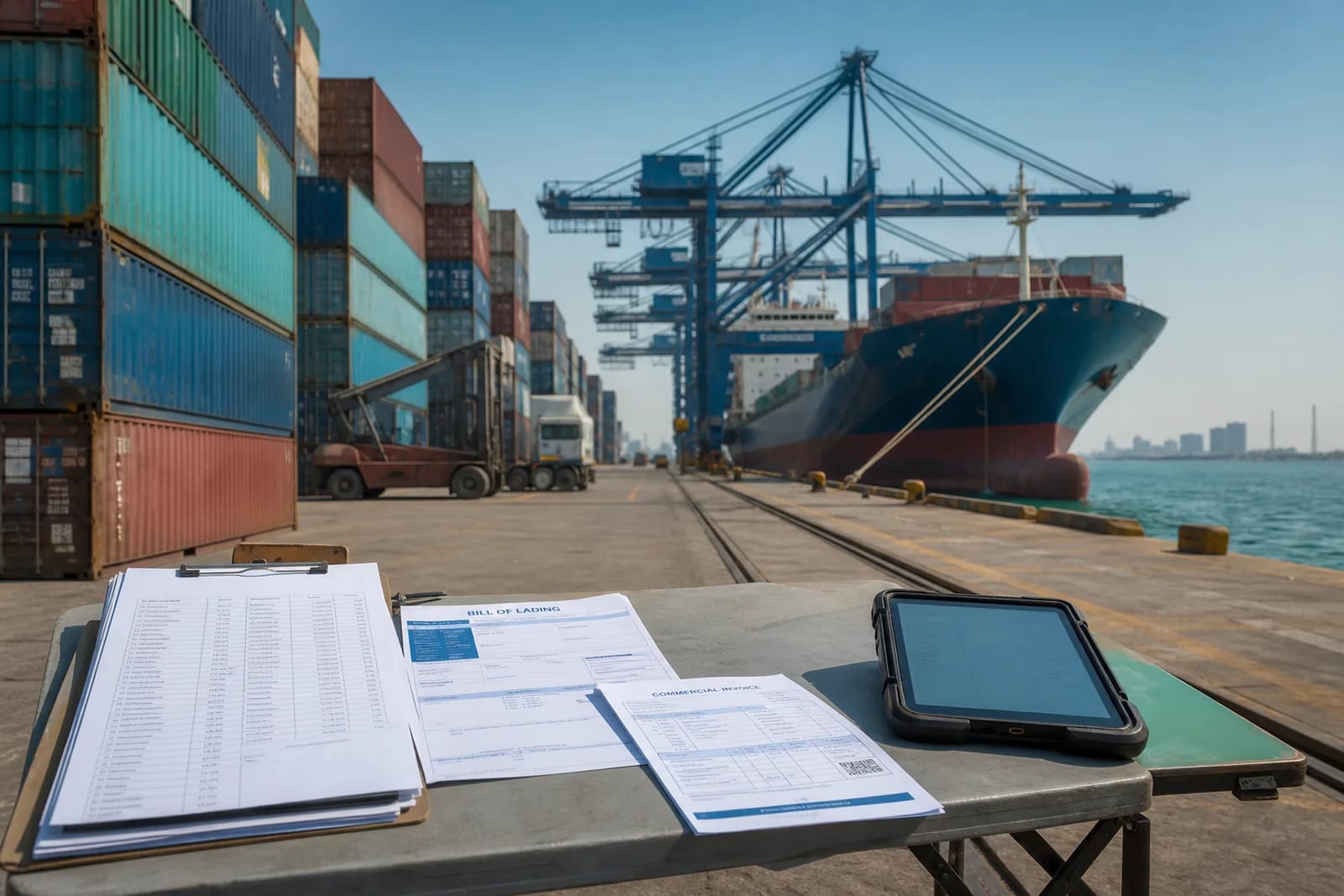
An import looks like one job: buy goods, get them delivered. In practice it is ten stages, often handled by different people. Most delays happen in the gaps between stages, when everyone thinks someone else has it.
1. Purchase order and commercial terms
You agree the goods, the price, the currency and the Incoterm with your supplier. The Incoterm decides who pays for freight and insurance, and who carries the risk at each point.
2. Payment instrument
You arrange how the supplier is paid: a letter of credit, an advance payment or open account terms. Some countries also require the import to be registered with a bank at this stage.
3. Shipping documents
The supplier sends the commercial invoice, packing list, bill of lading or airway bill, certificate of origin and any certificates the product needs. Check that they match before the goods arrive, not after.
4. Arrival
The ship or aircraft arrives and the cargo appears on the carrier's manifest. From this point, storage and demurrage charges may start to run.
5. Customs declaration
You or your customs broker file the import declaration, with the HS code, value and origin of the goods.
6. Risk channel and inspection
Customs decides whether to release the goods straight away, check the documents, or physically inspect the cargo. Clean, consistent documents make a quick release more likely.
7. Other agency clearances
Some goods need approval from other government agencies, such as food safety, health, standards or plant and animal health authorities.
8. Duty payment
You pay customs duty and import taxes. The amount comes from the customs value and the duty rate for the HS code.
9. Gate-out and goods receipt
The goods leave the port and reach your warehouse, where you check the quantities against the packing list.
10. Landed cost and inventory
Freight, insurance, duty, port charges, the agent's fee and transport are added to the goods' cost, so each unit enters stock at its real cost.
Track every stage on one file
In Customer Flow, each import file moves through these ten stages, with its documents, costs and approvals attached. Anyone on the team can see which stage a shipment is at and what it is waiting for.
To see what stage 10 means for your own numbers, try the free landed cost calculator.