
Import & export
Import documents checklist: the papers every shipment needs
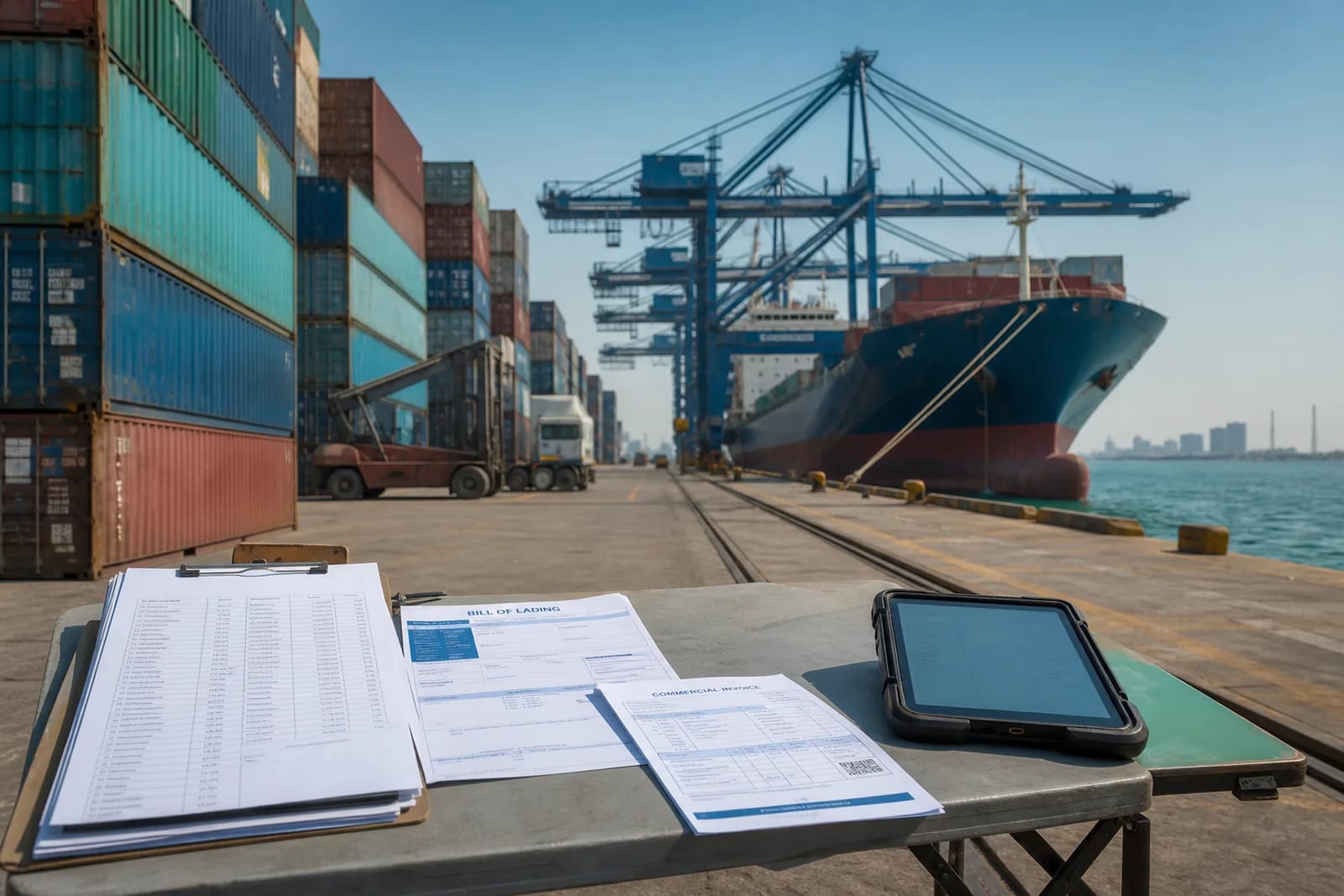
A shipment clears customs on its paperwork. One missing or mismatched document can hold goods at the port while storage charges build up. This checklist covers the papers most imports need. Your country and goods may need more, so confirm with your customs broker. To see what duty and charges add to the cost of a shipment, try the free landed cost calculator.
Commercial invoice
The supplier's bill for the goods. It shows the buyer, seller, description, quantity, unit price, currency and Incoterm. Customs uses it to value the goods, so it must match everything else.
Packing list
What is in each carton or pallet, with weights and dimensions. Customs and the warehouse use it to check the cargo. Quantities must match the invoice exactly.
Bill of lading or air waybill
The carrier's receipt for the goods and the contract to carry them. For sea freight, the original bill of lading can also be the title to the goods, so you may need it to collect your cargo.
Certificate of origin
Proof of where the goods were made. It decides which duty rate applies, and can unlock lower rates under trade agreements.
Insurance certificate
Proof the goods are insured in transit, needed when the seller arranges insurance, for example under CIF terms.
Import declaration
The customs entry your broker files, listing the goods, their HS codes, value and duty. It is built from the documents above, which is why they have to agree.
Permits, licences and inspection certificates
Some goods need extra approval: food, medicines, chemicals, electronics and more. Check before you order, because a missing permit is the hardest problem to fix once goods have landed.
Keep them on one file
Most delays come from mismatches: an invoice quantity that differs from the packing list, or a final PDF in someone's inbox that nobody else can find. In Customer Flow, every document is attached to the shipment it belongs to, with a record of who approved what and when. When customs asks a question, the answer is in one place.