
Export
Export documents checklist: what every shipment needs
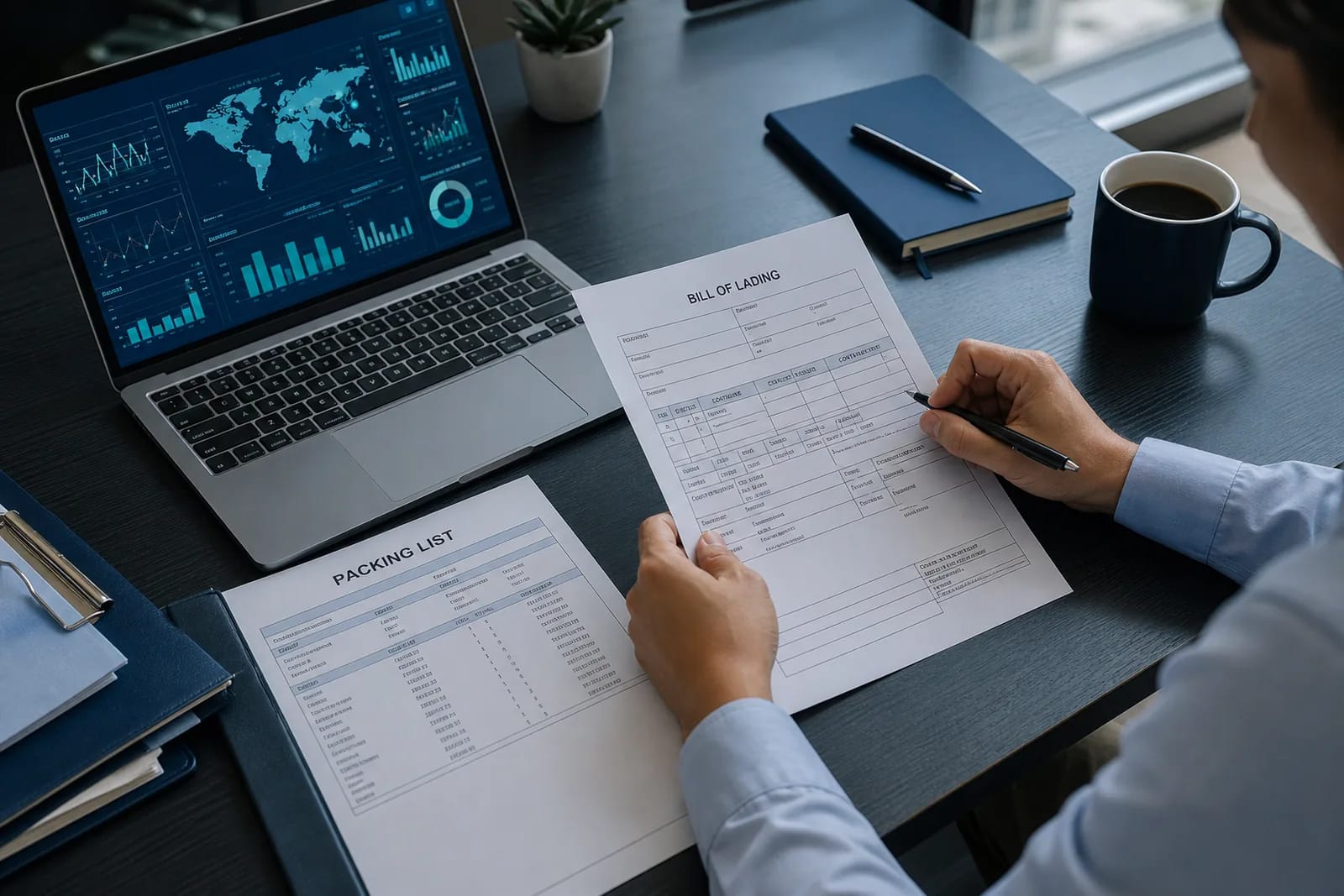
Most export delays are not caused by ships or trucks. They are caused by paperwork that is missing, late, or does not match. Before goods leave, every document in the set must tell the same story about what is being shipped, to whom, and on what terms.
The core export documents
The commercial invoice states what you sold, to whom, at what price and on which Incoterm. Customs in both countries uses it to value the goods.
The packing list shows how the goods are packed: the number of packages, the weights, the dimensions and the marks on each one. The forwarder and customs check it against the cargo.
The export declaration is filed with customs in your country, usually by you or your customs broker. It reports the goods, their value and their HS code.
The transport document is a bill of lading for sea freight or an airway bill for air freight. A bill of lading can also prove who owns the goods, so its wording matters when a bank is involved.
A certificate of origin shows where the goods were made. The buyer often needs it to claim a lower duty rate under a trade agreement.
Documents you may also need
An insurance certificate, if your Incoterm makes you responsible for insuring the cargo. Product certificates or permits for food, chemicals, medicines or controlled goods. Inspection certificates when the buyer or the destination country asks for them. Bank documents when the sale is paid by a letter of credit.
The exact list depends on the product and the destination, so confirm it with your forwarder or customs broker before you book.
The mismatches that hold goods
The quantity on the invoice differs from the packing list. The weights on the packing list differ from the bill of lading. The product description is vaguer on one document than another. The consignee's name is spelled differently. Each one is small, and each one can stop a shipment or a payment under a letter of credit.
Keep the set on one file
In Customer Flow, every export file holds its documents together with the sales order, the stage the shipment has reached and who approved each step. Everyone works from the same version, so a mismatch is caught before it reaches the port.
Pricing an export and want to check the costs on the buyer's side? Try the free landed cost calculator.